

DOC'S LIFE

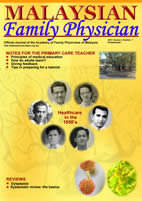
HEALTH CARE IN THE FIFTIES: PART 1
Reflections of Tun Dr Mahathir and Tun Dr Siti Hasmah
The graduation ceremony in 1955 sealed her place in history as the second Malay female doctor in Malaya. She did her housemanship at the Kuala Lumpur General Hospital. There were so many diphtheria cases that it occupied half the Paediatric ward. Children would arrive at the hospital with severe breathing difficulties and cyanosis. Urgent tracheostomies had to be performed but she was petrified of incising the neck with a scalpel. Fortunately, her colleagues were very helpful. The other half of the Paediatric ward was occupied by cases of meningitis and spinal tuberculosis which had to be treated with intrathecal streptomycin. Infectious childhood diseases were rampant since vaccinations were not yet routinely available and parents were also not keen for their children to be vaccinated. One of her unpleasant duties in the ward was to count the number of worms passed out and record them in the patient’s hospital folder. There were also many cases of malaria, typhoid, dysentery and PUO referred from the surrounding towns. She also noticed that Indians made up the majority of heart cases.
After her marriage, she was posted to Alor Star General Hospital. Her first duty was at the outpatient clinic before she was sent to the wards. Since the Malays were reluctant to be admitted for chronic care, special consideration was made for the Malays and they were placed in a ward called the ‘Malay Hut’ which was attached to the main ward. During her obstetric posting, she saw many cases of postnatal kaki lembik (floppy legs) – a neuropathy commonly seen in beri-beri as a result of pantang-larang (food taboos). These Malay postnatal mothers’ diet consisted only of rice with some salted fish; vegetables were forbidden. Hence, their diet lacked essential vitamins. They were given daily vitamin B1 injections in the ward which produced rapid recovery. Despite advice to have a balanced diet, it was common to see the same patients admitted with the same problem after their next childbirth. Poor diet and poverty were also reasons for high cases of anaemia seen. When Tun Dr Siti Hasmah was an O&G registrar she saw many cases of eclampsia and maternal mortality was very high.
Efforts to improve the pregnant mother’s health and safety during delivery were strongly opposed by traditional birth attendants (TBAs). Poor hygiene among the traditional birth attendants who used bamboo to cut umbilical cords put the mothers and babies at risk of getting tetanus. The Kedahans were very conservative and had to be persuaded to use government midwives.Recognising the pressing need for a Malay midwife to assist in handling these sensitive issues, Tun Dr Siti Hasmah recalled that the Kedah Health authorities employed Mak Buang to work in Kedah. Mak Buang was the first Malay midwife to be trained by the British. She was working in Kuala Lumpur but unfortunately, being a widow, she was ostracised by her patients who were afraid that she might entice their husbands. She was warmly received in Kedah and did not face such stigma from her northern patients. The authorities appreciated her presence and accorded her special privileges including a rickshaw at her disposal.
To get TBAs to adopt hygienic practices, courses on basic hygiene were conducted. Selected TBAs were invited to enrol in the course and were given special aluminium bags containing birthing equipment such as scissors. These bags were inspected monthly to ensure that hygiene was maintained. Upon successful completion of the course, TBAs were awarded certificates which they would proudly display at their homes. The TBAs were also registered. Young girls who had completed primary school were recruited and trained as midwives. These measures helped to reduce the maternal mortality in Kedah.
Tun Dr Siti Hasmah had a distinguished medical career and chalked up a number of firsts; among which she was the first female doctor to be appointed Medical Officer of Health Department, North Kedah, in 1965 and State Maternal Child Health Officer, Kedah, in 1974. She retired in 1979 to be by her husband’s side and to offer him support in his promising political career.
She hopes that doctors will always be aware of new emerging diseases which were unheard of before while not forgetting old diseases which still remain a threat. She wishes that with the availability of new technology, new breed of doctors will be able to find fresh solutions for these diseases. Patients nowadays are more intelligent and demand better medical services. As such, doctors must be able to listen to their patients and be able to educate their patients well. Lastly, she appealed for better racial integration as life is much more fun with friends from different cultures.Editor’s note: There is no shortage of published materials on Tun Dr Mahathir (Prime Minister of Malaysia 1981-2003). You may read more about him in: Ong HT. A doctor's duty is to heal the unhealthy: the story of Tun Dr Mahathir Mohamad. Ann Acad Med Singapore. 2005; 34(6):45C-51C. [Full text]